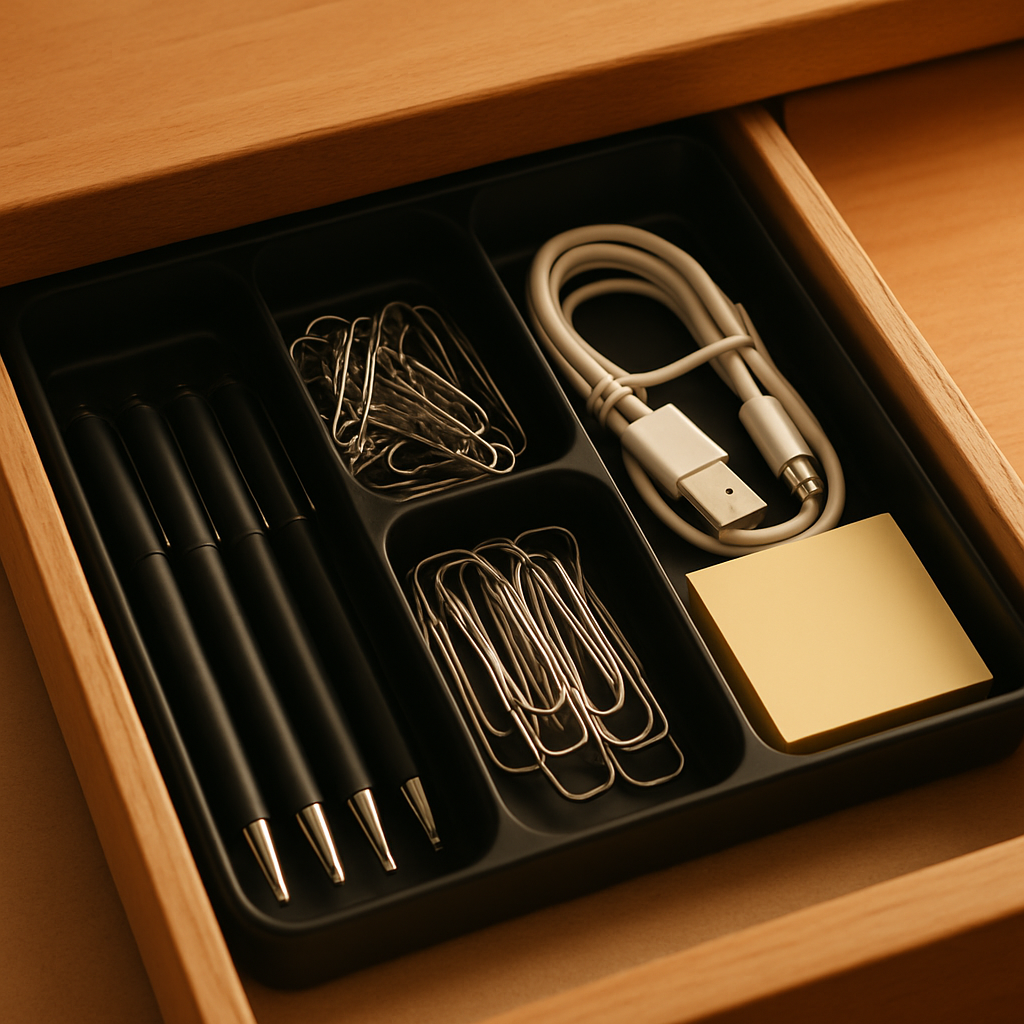
Drawer organizers are not magic trays. They work when item groups, access patterns, drawer measurements, and reset habits are clear first.
Check width, depth, height, and closure clearance.
Sort items by task and frequency.
Remove duplicates before buying trays.
Bundle only desk-relevant cords.
Keep daily items closest.
Make cleanup under one minute.
Start by dumping and grouping the drawer
A desktop drawer organizer only works after the drawer is honest. Empty it, group pens, clips, chargers, adapters, sticky notes, keys, batteries, and odd tools, then decide what deserves a permanent slot.
The practical drawer test is simple: can a tired worker open the drawer, find the item, and put it back without thinking? If not, simplify the layout before buying another tray.
Create zones by task, not by product type
Useful drawers group items by the way work happens: writing, charging, mailing, repair, note capture, or daily carry. Task zones make it easier to find items during a busy day.
The practical drawer test is simple: can a tired worker open the drawer, find the item, and put it back without thinking? If not, simplify the layout before buying another tray.
Choose dividers that match item size
Tiny bins look tidy in photos but waste space if the real items are long pens, bulky adapters, label rolls, or sticky-note stacks. Measure the drawer depth and tallest item before buying.
The practical drawer test is simple: can a tired worker open the drawer, find the item, and put it back without thinking? If not, simplify the layout before buying another tray.
Put daily items in the easiest reach
Daily items should sit in the front row or center lane. Rarely used spare parts, extra clips, and travel adapters can live farther back. A drawer that treats everything as urgent becomes messy quickly.
The practical drawer test is simple: can a tired worker open the drawer, find the item, and put it back without thinking? If not, simplify the layout before buying another tray.
Tame cables before they knot
Small cable ties, shallow trays, and labeled pouches prevent charging cords from turning into a drawer knot. Keep only the cables that belong to the desk; archive duplicates somewhere else.
The practical drawer test is simple: can a tired worker open the drawer, find the item, and put it back without thinking? If not, simplify the layout before buying another tray.
Use light labels without overbuilding
Labels help shared desks and busy drawers, but too many labels can make the system fragile. Label broad zones, not every tiny object, unless multiple people use the drawer.
The practical drawer test is simple: can a tired worker open the drawer, find the item, and put it back without thinking? If not, simplify the layout before buying another tray.
Build a 60-second reset habit
At the end of the day, return loose items to zones, throw away dead scraps, and move orphan items to a decision spot. The reset matters more than the organizer brand.
The practical drawer test is simple: can a tired worker open the drawer, find the item, and put it back without thinking? If not, simplify the layout before buying another tray.
Account for drawer depth and sliding clearance
Some organizers fit the footprint but block the drawer from closing once items are inside. Check height, drawer lip, and whether pens or scissors sit above the tray.
The practical drawer test is simple: can a tired worker open the drawer, find the item, and put it back without thinking? If not, simplify the layout before buying another tray.
Compare products after defining the mess
Product rankings make sense after the user knows the drawer size, item groups, and reset routine. Then the LeStallion shortlist can be judged by fit, not just style.
The practical drawer test is simple: can a tired worker open the drawer, find the item, and put it back without thinking? If not, simplify the layout before buying another tray.
Materials affect feel and cleaning
Bamboo, plastic, metal mesh, and fabric inserts each behave differently. Choose a material that matches the drawer, item weight, and cleaning routine.
The practical drawer test is simple: can a tired worker open the drawer, find the item, and put it back without thinking? If not, simplify the layout before buying another tray.
Plan one overflow rule
Every drawer gets surprise items. A small overflow zone or monthly cleanout rule prevents the entire organizer from collapsing when new accessories arrive.
The practical drawer test is simple: can a tired worker open the drawer, find the item, and put it back without thinking? If not, simplify the layout before buying another tray.
Make the top layer visually obvious
The drawer should communicate its system at a glance. If every compartment looks identical, add simple visual cues through wider bins, front-row placement, or broad labels. The user should not need to remember where tiny supplies belong.
The practical drawer test is simple: can a tired worker open the drawer, find the item, and put it back without thinking? If not, simplify the layout before buying another tray.
Schedule a monthly edit
Drawer systems drift as new accessories arrive. A short monthly edit clears dead pens, extra adapters, empty packaging, and items borrowed from other rooms. This keeps the organizer useful instead of letting it become a decorated junk drawer.
The practical drawer test is simple: can a tired worker open the drawer, find the item, and put it back without thinking? If not, simplify the layout before buying another tray.
Related reading
Compare product options in the desktop drawer organizer recommendations, then review the previous support page on UV sanitizing devices for office equipment.