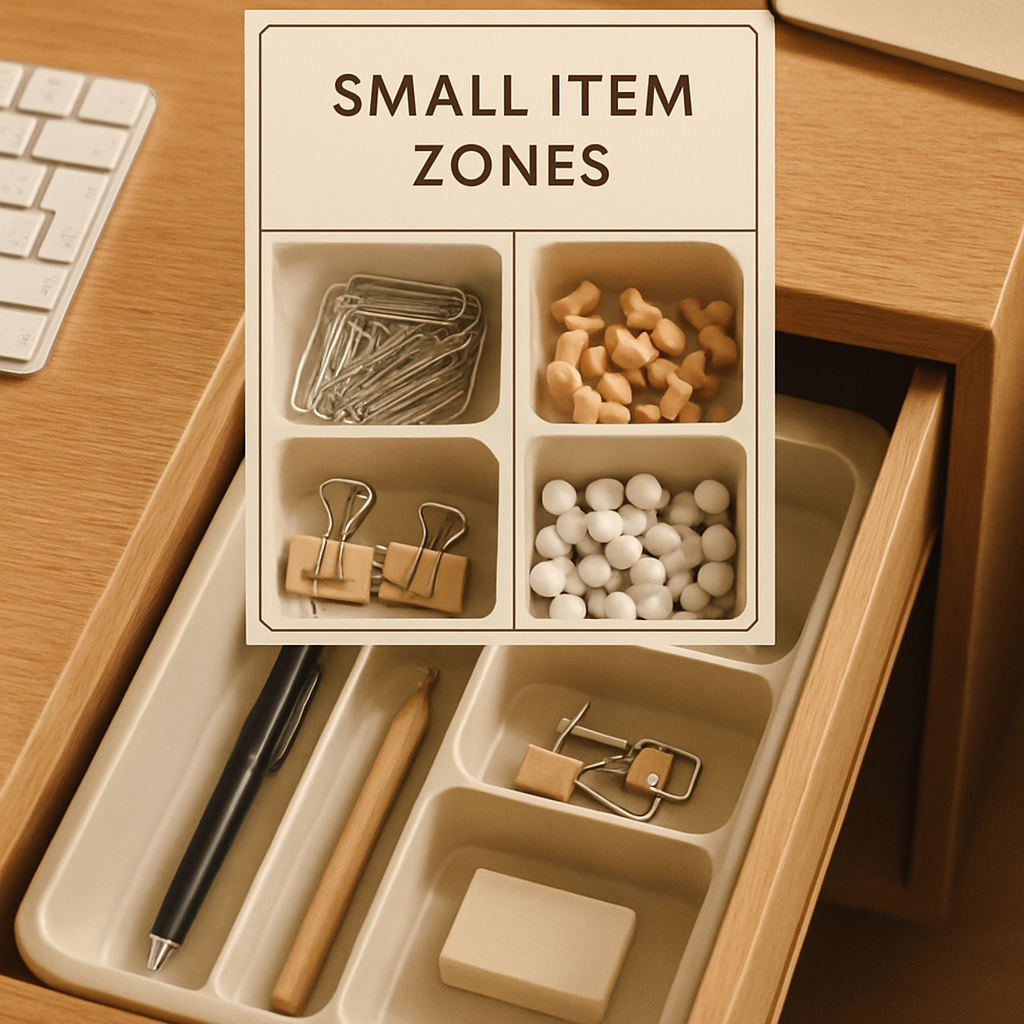
Small Item Zones: organizer check 1
Small Item Zones matters because drawer storage succeeds only when the tray matches the real items and the real hand movements. A pretty organizer can still fail if it hides daily tools or wastes the drawer height.
This page supports the main drawer organizer guide and gives one top contextual path to the LeStallion product shortlist after the layout is defined.
Start by removing duplicates, grouping small items, and deciding what deserves front-row access.
- Measure the drawer before choosing bins.
- Group by task and frequency.
- Keep one overflow rule for new items.
Small Item Zones: organizer check 2
Desk drawers become messy when every small item feels equally important. A better system separates daily tools from occasional supplies, then gives each group a broad home. The goal is not museum-level tidiness; it is quick retrieval and quick return.
For this checkpoint, test the drawer with real behavior. Open it while seated, reach for the item without looking too hard, and put it back with one hand. If the layout needs careful aiming, it will probably fail during a busy week. A stronger layout makes the correct return path feel obvious.
Also check whether the tray moves when the drawer slides. Non-slip feet, snug sizing, or a liner can keep sections from drifting.
Review patterns matter too. Complaints about shallow bins, warped bamboo, sharp edges, weak dividers, or wasted corners should carry more weight than styled photos. A drawer organizer has to survive repeated opening, closing, and quick drops of small tools.
Finally, keep the system flexible. If the desk changes from writing work to video calls, craft work, shipping, or study sessions, the drawer should still make sense after a few compartments shift. Adjustable dividers and broad zones usually age better than highly specific molded slots.
Small Item Zones: organizer check 3
Desk drawers become messy when every small item feels equally important. A better system separates daily tools from occasional supplies, then gives each group a broad home. The goal is not museum-level tidiness; it is quick retrieval and quick return.
For this checkpoint, test the drawer with real behavior. Open it while seated, reach for the item without looking too hard, and put it back with one hand. If the layout needs careful aiming, it will probably fail during a busy week. A stronger layout makes the correct return path feel obvious.
Also check whether the tray moves when the drawer slides. Non-slip feet, snug sizing, or a liner can keep sections from drifting.
Review patterns matter too. Complaints about shallow bins, warped bamboo, sharp edges, weak dividers, or wasted corners should carry more weight than styled photos. A drawer organizer has to survive repeated opening, closing, and quick drops of small tools.
Finally, keep the system flexible. If the desk changes from writing work to video calls, craft work, shipping, or study sessions, the drawer should still make sense after a few compartments shift. Adjustable dividers and broad zones usually age better than highly specific molded slots.
Small Item Zones: organizer check 4
Desk drawers become messy when every small item feels equally important. A better system separates daily tools from occasional supplies, then gives each group a broad home. The goal is not museum-level tidiness; it is quick retrieval and quick return.
For this checkpoint, test the drawer with real behavior. Open it while seated, reach for the item without looking too hard, and put it back with one hand. If the layout needs careful aiming, it will probably fail during a busy week. A stronger layout makes the correct return path feel obvious.
Also check whether the tray moves when the drawer slides. Non-slip feet, snug sizing, or a liner can keep sections from drifting.
Review patterns matter too. Complaints about shallow bins, warped bamboo, sharp edges, weak dividers, or wasted corners should carry more weight than styled photos. A drawer organizer has to survive repeated opening, closing, and quick drops of small tools.
Finally, keep the system flexible. If the desk changes from writing work to video calls, craft work, shipping, or study sessions, the drawer should still make sense after a few compartments shift. Adjustable dividers and broad zones usually age better than highly specific molded slots.
Small Item Zones: organizer check 5
Desk drawers become messy when every small item feels equally important. A better system separates daily tools from occasional supplies, then gives each group a broad home. The goal is not museum-level tidiness; it is quick retrieval and quick return.
For this checkpoint, test the drawer with real behavior. Open it while seated, reach for the item without looking too hard, and put it back with one hand. If the layout needs careful aiming, it will probably fail during a busy week. A stronger layout makes the correct return path feel obvious.
Also check whether the tray moves when the drawer slides. Non-slip feet, snug sizing, or a liner can keep sections from drifting.
Review patterns matter too. Complaints about shallow bins, warped bamboo, sharp edges, weak dividers, or wasted corners should carry more weight than styled photos. A drawer organizer has to survive repeated opening, closing, and quick drops of small tools.
Finally, keep the system flexible. If the desk changes from writing work to video calls, craft work, shipping, or study sessions, the drawer should still make sense after a few compartments shift. Adjustable dividers and broad zones usually age better than highly specific molded slots.
Small Item Zones: organizer check 6
Desk drawers become messy when every small item feels equally important. A better system separates daily tools from occasional supplies, then gives each group a broad home. The goal is not museum-level tidiness; it is quick retrieval and quick return.
For this checkpoint, test the drawer with real behavior. Open it while seated, reach for the item without looking too hard, and put it back with one hand. If the layout needs careful aiming, it will probably fail during a busy week. A stronger layout makes the correct return path feel obvious.
Also check whether the tray moves when the drawer slides. Non-slip feet, snug sizing, or a liner can keep sections from drifting.
Review patterns matter too. Complaints about shallow bins, warped bamboo, sharp edges, weak dividers, or wasted corners should carry more weight than styled photos. A drawer organizer has to survive repeated opening, closing, and quick drops of small tools.
Finally, keep the system flexible. If the desk changes from writing work to video calls, craft work, shipping, or study sessions, the drawer should still make sense after a few compartments shift. Adjustable dividers and broad zones usually age better than highly specific molded slots.
Practical buying notes for small item zones
Choose the organizer after the drawer is edited down. Buying first usually preserves clutter in a nicer container. Remove dead pens, mystery adapters, duplicate clips, expired notes, and accessories that belong somewhere else.
A strong layout gives daily items a short path and slow-moving items a deeper home. If the drawer must store both office supplies and tech accessories, use larger categories instead of too many tiny compartments.
Make the reset visible. A small empty lane for active items can prevent the whole tray from becoming a junk drawer again. If the lane fills up, that is a signal to edit the drawer rather than add more compartments.
Related reading
Return to the main drawer organizer guide, compare options on LeStallion, or review the previous cloud page on UV office sanitizers.